Support our educational content for free when you purchase through links on our site. Learn more
What Is the Simplest Magic Trick for a Crowd? 🎩

A clear prediction trick is one of the simplest magic tricks to perform for a large audience. It needs only a few basic props, little sleight of hand, and—most importantly—a reveal everyone can see from the back row.
Picture this: a volunteer freely chooses a card, you open a sealed envelope that’s been in view all along, and your prediction matches. The method takes practice, but the audience needs only one simple question to follow: Will the choice match?
A coin vanish can be easier to learn, but from the back of a hall, that coin may be about as visible as a magician’s secret. We’ll show you how to make a prediction trick play big, plus share other beginner-friendly effects and tips for choosing the right one for your venue.
Key Takeaways
- Try a prediction trick first: it’s beginner-friendly and easy to make visible with large, bold props.
- Design for the back row: use clear writing, good lighting, and a camera feed for small effects.
- Keep the routine simple: one clear premise, a willing volunteer, and a strong reveal beat complicated pater.
- Match the trick to the venue: coin vanishes suit close-up magic; larger visual effects work better onstage.
- Rehearse the whole experience: test your props, pacing, volunteer instructions, and sightlines before showtime.
Table of Contents
- ⚡ Quick Tips and Facts
- 🎩 The Simplest Magic Trick for a Large Audience
- Why a Visual Prediction Trick Works So Well
- What You’ll Need
- 📜 A Brief History of Stage Magic and Audience-Friendly Tricks
- 🪄 How to Perform the Trick: Step-by-Step
- Prepare the Prediction
- Invite Audience Participation
- Reveal the Prediction Clearly
- 🎤 Make a Simple Trick Work for a Big Crowd
- Project Your Voice and Build Suspense
- Make Props Visible from the Back Row
- Handle Volunteers with Confidence
- ✨ 7 Easy Magic Tricks That Play Big
- 1. The Sealed Prediction
- 2. The Rising Card
- 3. The Vanishing Silk
- 4. The Appearing Cane
- 5. The Cut-and-Restored Rope
- 6. The Floating Ring
- 7. The Linking Paper Clips
- ✅ Choosing the Right Trick for Your Venue and Audience
- Classroom, Party, Auditorium, or Outdoor Show
- Age, Group Size, and Audience Participation
- 🎭 Presentation, Misdirection, and Showmanship
- Write a Strong Opening and Ending
- Use Misdirection Without Making Anyone Uncomfortable
- 🧰 Props, Setup, and Rehearsal Checklist
- ⚠️ Common Mistakes and Safety Tips
- 🔧 Troubleshooting: What If the Trick Goes Wrong?
- 📚 Recommended Links
- ❓ FAQ
- 🔗 Reference Links
- 🏁 Conclusion
⚡ Quick Tips and Facts
The simplest magic trick to perform for a large audience is a clear prediction effect: write down a prediction, invite a volunteer to make a choice, and reveal that your prediction matches. It needs little technical skill, scales better than a small coin vanish, and lets the audience share the surprise.
If you’re looking for a quick starting point, our guide to an easy magic trick offers more beginner-friendly ideas. The key principle is simple: choose an effect people can see, understand, and remember from the back row.
| Quick fact | What it means for your performance |
|---|---|
| Best beginner-friendly large-crowd effect | A sealed or prominently displayed prediction |
| Essential ingredient | A bold, visible reveal |
| Most common challenge | Small props and quiet delivery disappear in a large room |
| Best first rehearsal | Perform for a few friends, then record yourself |
| Main rule | Make the effect clear before making it mysterious |
- ✅ Choose a trick with a simple plot and a strong visual ending.
- ✅ Use a large prop, a large written prediction, or a microphone and screen.
- ❌ Don’t assume a close-up coin vanish will read clearly to a packed auditorium.
- ❌ Don’t repeat the same effect immediately; a second performance can invite method-hunting.
- 🎩 Keep the volunteer comfortable. The audience should laugh with them, never at them.
🎩 The Simplest Magic Trick for a Large Audience
We recommend a prediction trick as the simplest reliable choice for a large audience. It avoids difficult sleight of hand, uses ordinary materials, and gives everyone a shared moment of anticipation. A card or coin vanish may be easier to demonstrate at a kitchen table, but a large audience needs a result that carries across the room.
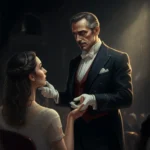
Here’s the basic effect: before the show, write a prediction and leave it in a visible, sealed envelope. A volunteer makes a choice from a small set of options. You open the envelope and show that your prediction matches.
For the secret method, use a prearranged choice: present the options in a way that lets the volunteer make a seemingly free choice while leading to the outcome you’ve prepared. Practice the handling and wording so the choice feels natural, not forced. The magic is in the effect and presentation; don’t claim the volunteer had unlimited, unconstrained options if they didn’t.
This choice also addresses a disagreement between beginner trick guides. wikiHow’s magic-trick guide recommends a coin vanish as an accessible starting point. The Omni Magic guide to easy tricks likewise emphasizes that “the trick isn’t always about complexity.” Both are right for learning technique and entertaining a small group. For a large audience, visibility changes the recommendation: a prediction that can be displayed is generally a more practical starting point than a coin held between two hands.
Why a Visual Prediction Trick Works So Well
A large-room trick succeeds when people in the back can follow the action without needing to inspect your fingers. A prediction checks that box: the audience sees the envelope before the choice, watches a volunteer make the choice, then sees the written result.
| Feature | Prediction effect | Coin vanish |
|---|---|---|
| Technical difficulty | Low to moderate, depending on method | Moderate; natural sleight takes practice |
| Visibility from a distance | High if the prediction is enlarged | Low unless projected or filmed |
| Audience participation | Easy to include one volunteer | Usually limited to the nearest spectators |
| Props | Envelope, large paper, marker, choice cards | Coin |
| Best setting | Classroom, meeting, stage, party | Close-up or small group |
| Main drawback | The method and wording need rehearsal | The secret move can be exposed by poor angles |
A coin vanish is still a classic. It can be charming and powerful close-up, and the Mind Trick™ Close-up Magic collection is a useful place to explore that style. But from the back of a hall, a tiny coin can become a tiny question mark.
What You’ll Need
For a simple prediction routine, gather:
- One envelope that can be seen from the audience.
- One oversized prediction card or a sheet of paper with large, high-contrast writing.
- Three to five choices printed or written on separate cards.
- A thick marker, such as a Sharpie marker, for readable lettering.
- A volunteer who can stand where the audience can see them.
A microphone and projector aren’t magic props, but they can make the magic legible. For an auditorium, ask the venue about using its AV equipment and accessibility setup; clear communication benefits everyone, including people seated far away or with hearing or vision needs.
Keep your setup simple. The more props you jugle, the more chances you have to drop, forget, or accidentally reveal something. We learned this the hard way during a community workshop: the prediction was good, the marker worked, and the envelope had been left in a different room. The audience enjoyed watching us improvise, but the envelope did not deserve a solo.
📜 A Brief History of Stage Magic and Audience-Friendly Tricks

Magic has always adapted to the size of its audience. Close-up performers rely on intimate detail; stage magicians use movement, lighting, large props, and clear staging so the back row can follow the action. The Victoria and Albert Museum’s history of magic describes the long relationship between conjuring, performance, and public entertainment.
Modern beginner advice often starts with pocket-sized effects because they are convenient and teach useful principles. A coin vanish teaches concealment and attention management; a simple card effect teaches structure and audience interaction. But the easiest trick to learn is not automatically the easiest trick to see. That distinction matters when you’re performing for a crowd.
Magic psychology helps explain why. Attention is limited, and spectators interpret an effect through what they notice and expect. We discuss those ideas in our Magic Psychology section. For a large audience, the performer must guide attention with clear staging and timing rather than relying on a tiny secret action.
🪄 How to Perform the Trick: Step-by-Step
The routine below uses a pre-show written prediction and a controlled choice. It’s designed to beginner-friendly and visible; the exact method should be rehearsed until your handling and script feel relaxed.
Prepare the Prediction
- Pick a simple outcome. Use one word, symbol, or picture that can be written in large letters.
- Prepare the envelope. Put the prediction inside and seal it. Make it visible before the volunteer chooses.
- Prepare the choices. Write the options on separate large cards. Keep the set manageable: three to five options is enough.
- Use a consistent method. Decide how you’ll guide the choice before the show. Don’t improvise a force under pressure if you haven’t practiced it.
- Rehearse the display. Confirm that the envelope, choices, and final prediction can be seen from the back row.
For the audience, the envelope should look like a fair, continuous commitment. Avoid claims such as “I wrote this weeks ago” unless that is literally true. A straightforward presentation is both more trustworthy and easier to perform.
Invite Audience Participation
- Ask for a volunteer who is happy to join you. Give them a clear, easy task.
- Stand beside them rather than blocking their view of the audience.
- Show the available choices and explain the action in one sentence.
- Let the volunteer make the choice using the method you rehearsed.
- Repeat their selection aloud so the whole room can follow.
Use friendly language: “Pick one of these cards and hold it up so everyone can see.” Avoid putting a person on the spot with personal questions, physical contact, or jokes at their expense. The National Institute of Mental Health’s guidance on respectful communication is not a magic manual, but the basic principle is sound: treat people with care and respect.
Reveal the Prediction Clearly
- Pause after the choice. Give the audience a moment to register it.
- Ask the volunteer to hold their choice up or place it on a stand.
- Retrieve the envelope without rushing.
- Open it slowly, keeping the writing hidden until the reveal.
- Display the prediction at chest or shoulder height, facing the audience.
- Read the result aloud, then let the volunteer confirm the match.
- Hold the final image for a beat before thanking the volunteer.
The ending should be a picture, not a mumble. If your prediction says “MON,” turn the card outward and give the audience time to read it. A stage reveal that vanishes into your hands is like a punchline delivered into a pillow.
🎤 Make a Simple Trick Work for a Big Crowd
A simple trick can play beautifully in a large room if the audience can track the story. Stagecraft isn’t decoration; it’s how you make the effect understandable.
Project Your Voice and Build Suspense
- Speak clearly and at a measured pace. If a microphone is available, use it.
- Tell the audience what to watch for, but don’t explain the secret.
- Leave a short pause before the reveal. Silence can build anticipation.
- If the venue has a screen, ask whether a camera feed can show the props.
- Check that your microphone doesn’t block your face or the volunteer’s voice.
The National Institute on Deafness and Other Communication Disorders provides information about hearing and communication. In practice, that means not relying solely on spoken instructions: display the choices and prediction clearly, too.
Make Props Visible from the Back Row
| Design choice | Better for a large audience | Less effective |
|---|---|---|
| Text | Bold, high-contrast lettering | Thin writing in pale ink |
| Prop size | Large card or sign | Small playing card held low |
| Position | Held still, facing the room | Turned sideways or waved around |
| Lighting | Bright, even stage light | Backlighting that silhouettes the prop |
| Reveal | One clear final image | Several fast, confusing movements |
A deck of Bicycle playing cards is a familiar choice for card magic, but standard cards are small. If you perform a card effect onstage, use an overhead camera, large cards, or a method that communicates the selection another way. Explore our Card Tricks collection for effects that can be adapted to different settings.
Handle Volunteers with Confidence
A volunteer is your co-star, not your prop. Explain what they need to do, give them time, and thank them by name if they’re comfortable sharing it.
- Invite rather than command.
- Offer an easy way to decline.
- Never blame a volunteer if a trick misses.
- Don’t ask for private or sensitive information.
- Keep the routine moving if someone freezes or changes their mind.
For children’s shows, adapt the pacing and interaction to the group. Our Kids Magic collection focuses on effects that are accessible and playful.
✨ 7 Easy Magic Tricks That Play Big
These ideas vary in setup, visibility, and skill. A trick that works at arm’s length may need a larger prop or camera feed onstage. Try each effect in the actual room, or in a space with similar lighting and distance.
| Trick | Skill level | Large-room visibility | Best use |
|---|---|---|---|
| Sealed prediction | Beginner-friendly | High | Stage, classroom, meeting |
| Rising card | Beginner to intermediate | Medium | Small stage with a camera |
| Vanishing silk | Beginner to intermediate | High with a large silk | Parties and stage |
| Appearing cane | Beginner to intermediate | High | Stage entrance or opener |
| Cut-and-restored rope | Beginner-friendly | High | Family show, classroom |
| Floating ring | Intermediate | Medium | Intimate stage, controlled lighting |
| Linking paper clips | Beginner-friendly | Low to medium | Small group or projected close-up |
1. The Sealed Prediction
Best for: A beginner’s first stage routine.
Use the step-by-step routine above. Its strengths are a clear plot and a readable ending. Its drawback is that the selection method and handling need to feel natural. Rehearse the volunteer interaction, not just the secret.
2. The Rising Card
Best for: A card performer with a screen or close audience.
A selected card seems to rise from the deck. The effect is visually appealing nearby, but the movement can be hard to see from the back of an auditorium. Use a camera feed, oversized cards, or perform it in a smaller room.
For card handling and related techniques, browse Mind Trick™ Card Tricks. Standard Bicycle playing cards are widely used, though the deck alone doesn’t make the effect visible at distance.
3. The Vanishing Silk
Best for: A bold visual moment with a colorful prop.
A silk handkerchief disappears using a concealed load or specialized handling. The bright fabric reads better than a coin, but the secret action still needs angles and rehearsal. Start with a basic silk vanish method and practice in front of someone seated at the side, not just directly in front.
A real silk prop from a magic supplier may be more suitable than a small, dull-colored scarf. Consider visibility and fabric quality, and avoid products that require unsafe or improvised materials.
4. The Appearing Cane
Best for: A stage entrance or opening flourish.
An appearing cane creates a large, quick visual change. It’s more dramatic than a pocket-sized object but requires a purpose-built prop and careful handling. Practice in an open space, follow the manufacturer’s instructions, and keep the prop away from faces and crowded walkways.
This is a stage prop, not a toy. Don’t let children handle a collapsible or spring-loaded cane unsupervised.
5. The Cut-and-Restored Rope
Best for: Family audiences and interactive shows.
The audience sees a rope cut or apparently divided, then restored. Its size makes it easy to follow, and the routine can include volunteers. Use a purpose-made magic rope or a rehearsed method; don’t use sharp blades near volunteers. If a cutting effect is part of the presentation, use a safe prop and keep the handling under your control.
The benefit is clarity; the drawback is that the secret method may be exposed if the audience surrounds you. Keep spectators in a comfortable viewing area.
6. The Floating Ring
Best for: A quiet, atmospheric effect in a smaller venue.
A ring appears to float or move without support. This can create an uncanny mood, but it depends heavily on lighting, angle, and distance. A ring that looks magical from the front may look like ordinary thread from the side. Rehearse for multiple viewing angles, and avoid promising a full-room effect unless you’ve tested it.
For more large-scale visual ideas, explore Illusion Magic at Mind Trick™.
7. The Linking Paper Clips
Best for: A quick interactive moment at a table or classroom.
Two paper clips link together after a spectator holds folded currency or paper. The effect is easy to carry and teach, but small. It’s a strong close-up trick and a weak choice for an unamplified auditorium unless a camera shows the action.
This is a useful reminder: portable doesn’t always mean stage-ready. Browse Close-up Magic for effects designed for nearby spectators.
✅ Choosing the Right Trick for Your Venue and Audience
There isn’t one perfect trick for every crowd. Room size, lighting, audience age, and available equipment all matter.
Classroom, Party, Auditorium, or Outdoor Show
| Venue | Good choice | What to plan for |
|---|---|---|
| Classroom | Prediction, rope routine, self-working card effect | Keep instructions short and involve volunteers |
| Birthday party | Silk vanish, appearing cane, simple prediction | Use playful pacing and age-appropriate interaction |
| Auditorium | Large prediction, oversized props, camera-assisted card trick | Sound, sightlines, stage lighting |
| Outdoor event | Bold visual effect with minimal delicate props | Wind, sunlight, noise, and changing distances |
| Corporate meeting | Prediction or audience-choice routine | Keep the tone polished and the volunteer comfortable |
For an outdoor show, test props in daylight. A thread-based floating effect may be difficult to see, while a high-contrast prediction board can remain clear.
Age, Group Size, and Audience Participation
- Young children: Use bright props, simple language, and a quick reveal.
- Older children: Add a volunteer role or a prediction they can verify.
- Adults: A clean premise and calm confidence often work better than overexplaining.
- Mixed-age audiences: Make the effect easy to follow without relying on a niche reference.
- Large groups: Invite one or two volunteers, but keep the main action visible to everyone.
The Smithsonian’s National Museum of American History provides a look at magic as performance and cultural history. One lesson from studying stage magic: the audience needs a shared point of attention, whether that’s a volunteer, a prop, or a written prediction.
🎭 Presentation, Misdirection, and Showmanship
The trick is the secret; the routine is the experience. As Omni Magic puts it, “most people aren’t looking for the secret; they’re looking for the fun.” That’s a useful reminder, as long as the fun doesn’t bury the effect under too much pater.
Misdirection is not simply waving a hand to make people look elsewhere. It’s the thoughtful management of attention through timing, movement, language, and expectation. Learn more through Mind Trick™ Magic Psychology.
Write a Strong Opening and Ending
A strong opening tells the audience what kind of experience to expect. A strong ending leaves them with one clear image.
- Start with a direct line: “I wrote down one prediction before anyone came onstage.”
- Keep the explanation short.
- Build a single question: “Will the choice match?”
- Pause before the reveal.
- End on the result, not a long explanation of the method.
In our workshops, we’ve seen beginners spend so much time describing a trick that the audience has forgotten what the question was. Keep the premise simple. Let the effect do the heavy lifting.
Use Misdirection Without Making Anyone Uncomfortable
- Direct attention to the effect, not to a person’s supposed gullibility.
- Avoid humiliating volunteers or pressuring them to participate.
- Don’t make false claims about real mind-reading or supernatural powers.
- If you frame a mentalism effect as mind reading, make it clear through the context that it’s entertainment.
For another angle on how people interpret perception and choices, see Mind Trick™ Magic Psychology. The audience can enjoy mystery without being asked to believe you possess paranormal abilities.
🧰 Props, Setup, and Rehearsal Checklist
Before showtime, check the simple things that keep a simple trick from becoming a complicated problem.
| Check | Ready? |
|---|---|
| Prediction is legible from the back row | ✅ / ❌ |
| Props are in the correct order | ✅ / ❌ |
| Envelope or container is visible before the choice | ✅ / ❌ |
| Volunteer instructions are short and clear | ✅ / ❌ |
| Lighting doesn’t obscure the reveal | ✅ / ❌ |
| Microphone and camera feed work, if used | ✅ / ❌ |
| Backup marker, paper, or prop is available | ✅ / ❌ |
| Routine has been rehearsed without rushing | ✅ / ❌ |
Try this rehearsal sequence:
- Practice the method slowly, without a script.
- Add the words and volunteer instructions.
- Record a full run-through on your phone.
- Watch it once with the sound off to check visibility.
- Watch it again without looking at the props to check your pacing.
- Ask a friend to sit at the farthest likely seat and report what they could see.
- Rehearse once more in the actual venue if possible.
For a beginner’s collection of effects, explore Kids Magic or Card Tricks depending on the audience and style you want.
⚠️ Common Mistakes and Safety Tips
Common mistakes
- Using a tiny prop without amplification. The audience may hear the trick but not see it.
- Rushing the reveal. Give people time to understand the result.
- Overexplaining the setup. A clear premise beats a long lecture.
- Repeating the same trick immediately. The second time, spectators may focus on method rather than effect.
- Blaming the volunteer. If something goes wrong, own it and move on.
- Performing only to a mirror. A mirror doesn’t represent side angles or a distant audience.
Safety and ethics
- Don’t use fire, blades, chemicals, or projectiles as beginner shortcuts.
- Use purpose-made props and follow their instructions.
- Keep spectators at a safe distance from moving or collapsing props.
- Obtain permission before filming or photographing volunteers.
- Don’t use a trick to pressure someone into disclosing private information.
For general event access, consult the ADA’s effective communication guidance. A trick is only “for everyone” when people can actually follow it.
🔧 Troubleshooting: What If the Trick Goes Wrong?
A missed prediction or dropped prop doesn’t have to end the show. Keep your composure, protect the volunteer’s dignity, and don’t expose the method while trying to repair the moment.
| What happens | Calm response |
|---|---|
| The prediction doesn’t match | Thank the volunteer, acknowledge the surprise, and move to a rehearsed backup |
| The envelope is missing | Use a spare prediction card or switch to a prepared verbal effect |
| The audience can’t see | Ask the volunteer to hold the choice higher; use the screen if available |
| The volunteer is nervous | Thank them and invite someone else, or complete the effect yourself |
| A prop falls | Pick it up naturally and reset; don’t turn the mistake into a dramatic scramble |
| Someone guesses the method | Smile, keep the routine moving, and avoid confirming or debating the secret |
We promised to return to the question of what makes the “simplest” trick the right one. The answer is not just fewest props or easiest sleight: it’s the simplest effect that the entire room can understand and see. That’s why a clear prediction often beats a tiny coin vanish onstage, while the coin may be the better choice at a dinner table.
📚 Recommended Links
- Easy magic trick ideas from Mind Trick™
- Mind Trick™ Card Tricks
- Mind Trick™ Magic Psychology
- Mind Trick™ Kids Magic
- Mind Trick™ Illusion Magic
- Mind Trick™ Close-up Magic
- wikiHow: How to Do Magic Tricks
- Omni Magic: Easy Magic Trick for Any Audience
❓ FAQ

What is the easiest magic trick to perform on stage for a large crowd?
A written prediction with a clear audience choice is one of the easiest stage-friendly options. It doesn’t require fast finger work, and the result can be displayed at a useful size. A coin vanish is easier to carry and can be excellent close-up, but it’s harder for a large audience to see without a camera feed.
Read more about “10 Best Card Tricks to Wow Large Audiences & Stage Shows 🎩 (2025)”
How can you make a simple magic trick visible to everyone in a large audience?
Use large, high-contrast props, good lighting, and a stable final display. If the trick depends on a small action, ask whether the venue can provide a camera and screen. Test visibility from the back and side seats rather than assuming the front-row view is enough.
What are the best beginner magic tricks for performing on stage?
Try a prediction, a cut-and-restored rope routine with safe props, a large silk vanish, or a simple audience-choice effect. The best beginner trick has a clear plot, a manageable method, and an ending that can be seen from a distance. For close-up settings, coin and card effects offer different skills to build.
Read more about “🧮 10 Mind-Blowing Calculation Magic Show Tricks (2026)”
How do you perform a mind-reading trick for a large audience?
Present it as mentalism or an entertainment effect, not genuine mind-reading. A simple version uses a prepared prediction and a controlled choice. Make the written choice visible to the audience, and avoid asking a volunteer to reveal personal information. The suspense should come from the prediction, not from making someone uncomfortable.
Read more about “27 Easy Magic Tricks to Amaze Anyone in 2026 🎩”
What props do you need for a simple large-audience magic trick?
For a prediction routine, you need an envelope, a large prediction card, readable choice cards, and a marker. A microphone, projector, or camera feed can help in a large venue. Keep a backup of any paper props, and test everything under the actual lighting.
Read more about “15 Card Tricks to Amaze Anyone 🃏”
How can you make a basic magic trick more impressive for a crowd?
Make the plot easy to follow, involve a willing volunteer, build a short pause before the reveal, and present the final result clearly. Showmanship amplifies a trick; it doesn’t replace visibility or practice. The Omni Magic crowd-trick article similarly emphasizes that simple effects can impress when performed well.
Read more about “15 Most Impressive Magic Tricks to Learn for Your Next Party 🎉 (2025)”
What is an easy illusion that can amaze a large audience?
A sealed prediction is a practical beginner option because the audience can see the setup and outcome. A vanishing silk or appearing cane can also read well onstage, but each requires a suitable prop and safe, rehearsed handling. Large-scale illusion magic usually needs more space, equipment, and practice than a basic prediction.
Read more about “🃏 20 Best Card Tricks to Master in 2026 (Beginer to Pro)”
Is a coin vanish a good trick for an auditorium?
Usually, it’s better for a small group. A coin is difficult to see from far away, so use a camera feed or choose a larger visual effect for an auditorium. The coin vanish remains an excellent way to practice timing and misdirection; it simply has a visibility drawback at scale.
🔗 Reference Links
- Smithsonian National Museum of American History: Magic collection
- Victoria and Albert Museum: A magical history of magic
- National Institute on Deafness and Other Communication Disorders
- ADA: Effective communication
- wikiHow: How to Do Magic Tricks
- Omni Magic: Easy Magic Trick for Any Audience
- Omni Magic: Simple Magic Tricks to Wow a Crowd
- Mind Trick™: Easy Magic Trick
🏁 Conclusion

For a large audience, choose the simplest trick that stays visible from every seat. Our top recommendation is a clear prediction routine: it requires modest props, welcomes audience participation, and gives the whole room one result to watch. A coin vanish is a terrific beginner effect for close-up performance, but its small scale makes it less dependable on a large stage.
Keep the setup honest, the volunteer comfortable, and the reveal bold. Rehearse from the back row, test the lighting, and use a camera feed when a small prop is essential. The secret may be clever, but the audience should never have to squint to enjoy it.